
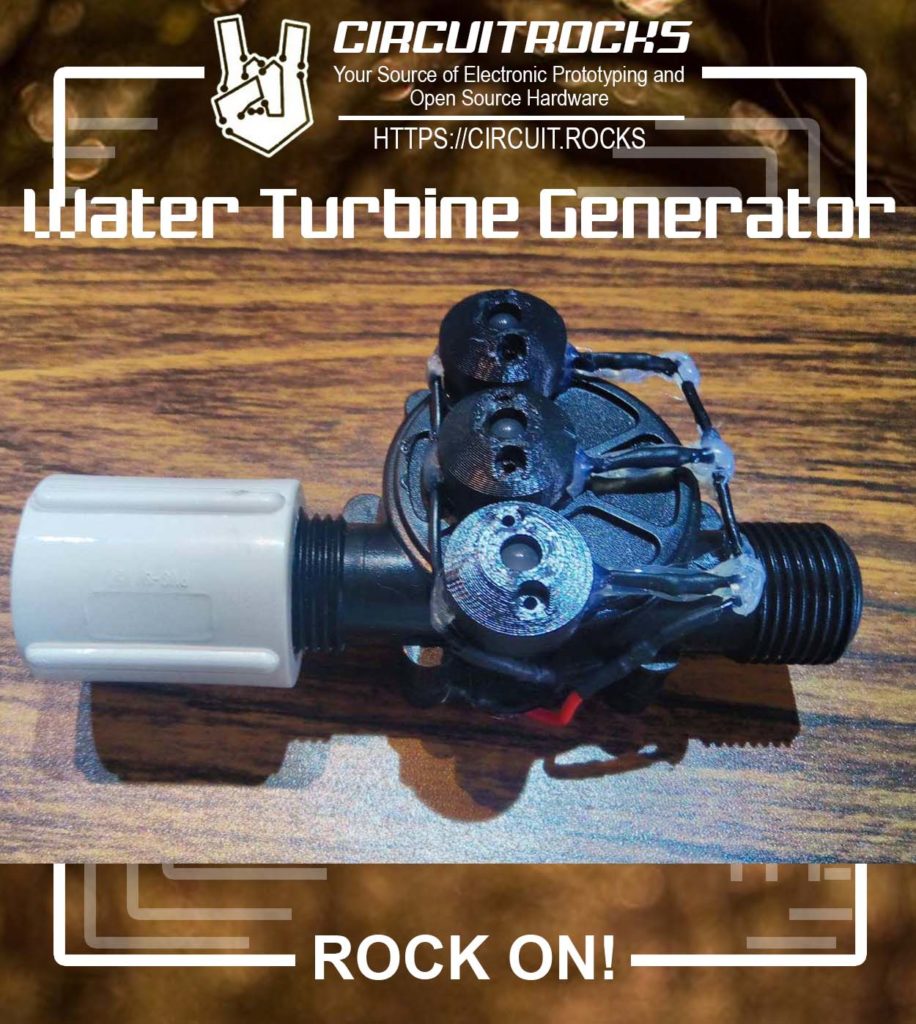
So just how do we get electricity from water?
This project converts the energy of flowing water into power,
it will light up the LED when water is flowing https://www.youtube.com/watch?v=W6yxk0ZwtPI Parts used for this project:
1. Water Turbine 5VDC 2.White LED

INTRODUCTION
This is a water turbine generator, 5V DC output, which can be directly used as Arduino power supply. Eco-friendly energy, you can make it work together with our lithium battery charger, working as a backup energy. This water turbine generator can be used in various hydro power generator application, such as smart faucets, sensing faucets, shower room lighting systems etc. The module comes with regulated power output, which provides standard 5V DC output. The maximum output current is up to 150Ma which is enough for most light application.
SPECIFICATION
- Working Pressure: 0 ~ 1.0 Mpa
- Tested Pressure: 0.6 MPa
- Temperature Range: 0 ~ 80 °C (maximum permissible ambient temperature 100 °C max: 30 min)
- Storage Temperature: -25 ~ 65 ° C
- Flow range: 2.5 ~ 20L / min (pressure 0.05-0.2mpa)
- Output Voltage: DC 5V (water flow 4L / min)
- Output Current: 0-150mA
- Output Voltage Starting Flow: DC 2.5V water flow 3.5L / min
Frequently Asked Questions
What does this Water Turbine Generator tutorial cover?
So just how do we get electricity from water? This project converts the energy of flowing water into power, it will light up the LED when water is flowing https://www.
What's the working voltage of the Water Turbine Generator?
Check the Sample Code section for the exact pinout — most maker-grade sensors run on 3.3V or 5V. Wire VCC to the matching rail, GND common with your MCU, data to a digital or analog pin.
Why does the Water Turbine Generator read garbage or saturated values?
Three usual causes: wrong voltage rail, missing pull-up resistor on I2C lines (4.7k–10k to VCC), or a floating data pin. Double-check wiring against the diagram, then probe with a multimeter.
