
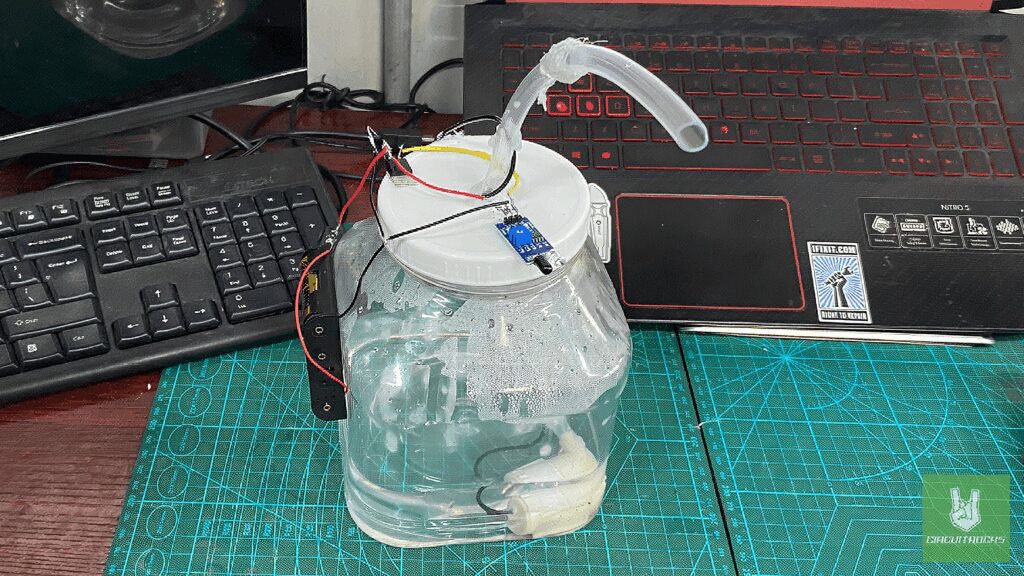
Let me share some green insights about the Automated Hand Rinsing Circuit. This simple but effective project shows how automation can make daily tasks cleaner and more sustainable. By detecting motion and activating a water pump only when needed, it reduces water waste while avoiding direct contact. This makes hand rinsing both hygienic and eco-friendly. Whether it’s for homes, offices, or public spaces, it offers a practical solution for promoting better hygiene with less environmental impact.
The circuit runs on batteries and uses a rocker switch for easy control, helping save energy by turning it off when not in use. It combines a TIP32C transistor with basic electronics to manage the pump efficiently, showing how simple design choices can lower power use and reduce waste. Overall, this project is a great example of how technology can deliver reliable, low-impact solutions that simplify our daily routines.
By building this system, you’re not just creating a helpful device – you’re learning how to design more sustainable and resource-conscious solutions. You’ll gain hands-on experience with assembling, soldering, and wiring, laying a solid foundation for future projects that aim to be both innovative and environmentally friendly. It’s your chance to turn creative ideas into greener real-world solutions!
Components
Connection:
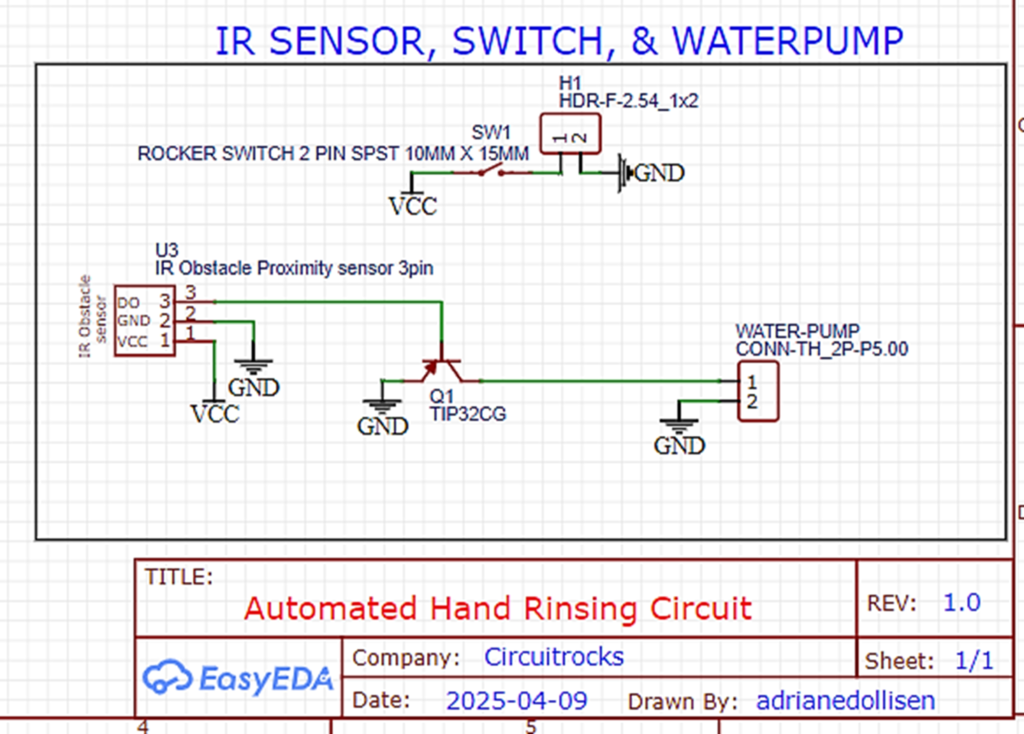
When the sensor sees an obstacle (like your hand), it sends a signal to a TIP32 transistor that acts as a switch, turning on the pump to dispense water without needing to press anything. A rocker switch is included to manually control power to the system.
QUICK LINK
Frequently Asked Questions
What does this Automated Hand Rinsing Circuit tutorial cover?
Let me share some green insights about the Automated Hand Rinsing Circuit .
What's the working voltage of the Automated Hand Rinsing Circuit?
Check the Sample Code section for the exact pinout — most maker-grade sensors run on 3.3V or 5V. Wire VCC to the matching rail, GND common with your MCU, data to a digital or analog pin.
Why does the Automated Hand Rinsing Circuit read garbage or saturated values?
Three usual causes: wrong voltage rail, missing pull-up resistor on I2C lines (4.7k–10k to VCC), or a floating data pin. Double-check wiring against the diagram, then probe with a multimeter.